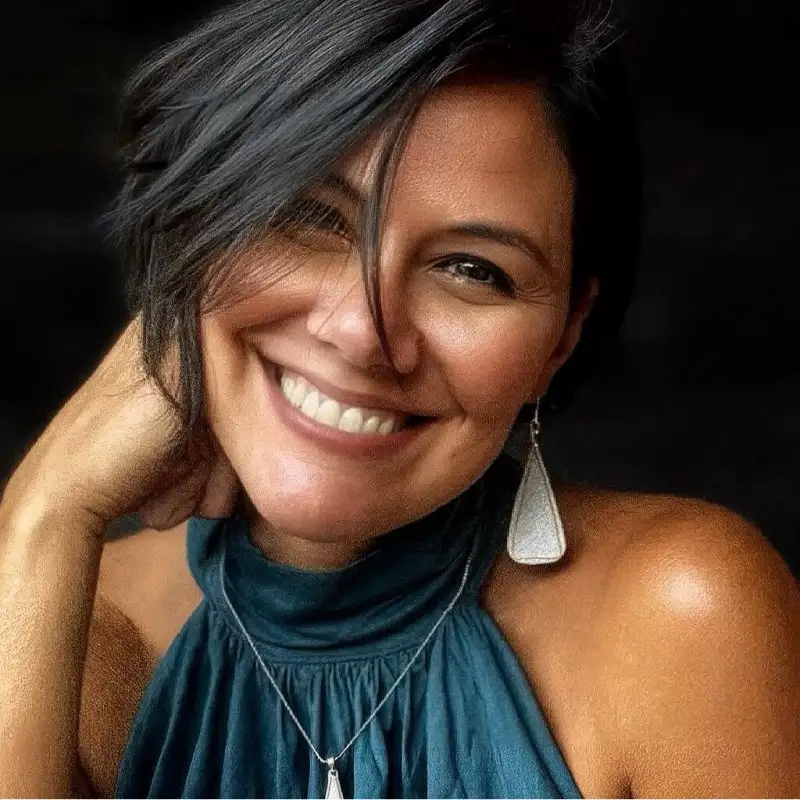
Tech as a Force for Good, Merging Brands, and Leading with Purpose with Sheryle Gillihan
Brent Peterson (00:01.122)
Welcome to this episode of EO Voices. Today I have Cheryl Gillhan Gillie Han, Gillie Han. I think I got it right, sorry. I am a butcher of names. Cheryl, Cheryl go ahead and she is the CEO of Cause Labs. There we go, I got it all out. Cheryl, go ahead and do introduction for yourself. Do it much more eloquent than I did. Tell us your day-to-day role and one of your passions in life.
Sheryle Gillihan (00:25.006)
All right, so my name is Cheryl Gillhan I am the owner and
Are we going to edit? OK. My name is Cheryl Gillhan. I am the owner and CEO of CauseLabs. I run the business with my husband, and so we are partners in business and in life. And as far as day to day, I am less and less in the day to day of the business, although I try to.
Brent Peterson (00:34.636)
We can, yeah, for sure.
Sheryle Gillihan (00:56.686)
keep a knowledge of everything that's going on. So my team runs pretty autonomously at this point because we've been at this for a while. But I am still in the know even in the details of the finances and things like that. And part of that is just, you know, the hurdles of small business ownership. You never know when you're gonna get a letter from the IRS and have to know what's going on. And so, yeah, I do have a...
pretty good grasp and handle on things, even though I'm not necessarily in the day-to-day of the operations and delivering of our work. We are a web agency. We have been around since 2003, so been around for a minute. And we focus on enterprise software and custom web applications, as well as website management services. And so,
That's everything from developing and designing a website, strategies around emerging technologies, as well as very custom backend systems and integrations.
Brent Peterson (02:00.45)
Wow, exciting. And how about passions? What do you do for a passion?
Sheryle Gillihan (02:04.866)
Well, I I would say that the work that I do is one of my passions. We focus very much on using tech as a force for good. And so I have a passion for the nonprofit sector and the social sector, do a lot of volunteering and, you know, the work that I do with organizations like water and sanitation organizations, education organizations, it is definitely, especially later in life.
become a passion of mine to create an impact and see an impact with everything that we touch.
Brent Peterson (02:40.354)
That's great. Before we get started, gonna talk, actually we're gonna talk also a little bit about our spouses and our business. But before we get started, I'm gonna tell you a joke and all you have to do is give me a rating eight through 13. So here we go. My family was amazed that I was able to get my electrician's license. Sometimes I'm even shocked.
Sheryle Gillihan (02:55.245)
Okay.
Sheryle Gillihan (03:05.358)
Okay.
Ten.
Brent Peterson (03:11.458)
All right, thank you. Thank you for that. I appreciate it. All right, so we sold our business. So my wife and I had a business for about 12 years and that's what we qualified with the EO and we sold it in 2021. So give us the highs and lows of working with your spouse. Let's start there.
Sheryle Gillihan (03:26.242)
Congratulations.
Sheryle Gillihan (03:32.344)
So I wasn't the original founder of CauseLabs, but I had been in the business for over a decade before we acquired it. He already had an agency of his own. And so we merged our businesses together and chose the more known brand. The challenges of that is that he had to give up his business and his brand to work with.
Coslabs, the longer lasting brand. And so that was a challenge initially. The other challenges of working with a partner is that it never turns off. Business already never turns off, especially if you're a small business owner. But it's hard sometimes to set those boundaries and to not talk about work and to allow ourselves to have a date night where we're.
We're not talking business. But then also with both of us being entrepreneurs, everything looks like a business opportunity. Like we bought a ranch here in Texas, a ranchette, I guess I should say, it's not a huge ranch. But now we're like, well, how do we turn this into a business? And every time we purchase anything, it's like, how do we turn this into a business? And we've just both.
kind of adopted this mindset and I think it's hard to just have fun sometimes and to like let that, lay that down.
Brent Peterson (05:09.632)
Yeah, my wife and I definitely have a code word, talk about business right now. Like, and especially we both would run, we were both runners and we do a lot of marathons and training together. So that would be like on a Saturday morning, we might run for three hours and at some point you're going to talk about work. And I particularly like to shut off. I don't talk about work outside of work. So that was always a challenge.
So I'm also interested in, just, I bought another company in April and we merged.
And I chose, I thought that our original name was good, but the company we bought was a longer standing company. So we ended up adopting their name. So I'm sort of in your husband's shoes and I was resistant, now it was the company's called Content Cucumbers. So it's kind of a corny name. I was like, Hmm, but yeah, people love it. And I now I'm realizing, you know, the importance of some of those long-term branding and that the value of those things bring in.
Talk a little bit about your business and that merger and how that went.
Sheryle Gillihan (06:24.366)
So the merger was easy just because it was the two of us and we were already partners. And so that portion of it was easy. The choosing of the name and whether or not we were going to use one of the existing names or a brand new name, that definitely was a challenge. Choosing the brand that was more established really came down to the fact that we know that branding is hard. And it takes a long time to establish your
brand within certain sectors. And so to have a brand that was already out there with high rankings, domain wise, already visible and already had articles and things like Forbes or Stanford Social Innovation Review and things like that, to have a brand that already had its name out there was kind of a leg up. And so we're like, well, that's just one less thing we have to worry about.
Branding can take years, if not decades, to really establish a brand to be a long-standing brand. so I think that's why it was important for us to choose the one that was more well-known, not necessarily that it was stronger. I loved this company brand. However,
This one, like I said, was definitely more well known and had more visibility around it kind of in the public spaces. As for the company, mean, obviously our work and impact is very aligned with the brand. It was aligned with his agency brand as well. His agency was Purpose WP. And so the difference there really just was the outreach that the Cause Labs brand had done.
Cause Labs doesn't focus so much on branding with our organizations that we work with, but we know the importance of it. And so while we don't necessarily, we're not necessarily the team that will create your logos for you. I mean, we can, but we're not necessarily the go-to partners for creating logos for you and things like that. We understand all of the work that goes behind the marketing of establishing a brand and establishing that brand is how you create the impact.
Sheryle Gillihan (08:40.719)
You have to be known and you have to be trusted in the community and you have to establish those relationships to get anywhere with the work that you're doing.
Brent Peterson (08:49.855)
Yeah, let's talk a little bit about EO and you're in EO Fort Worth. What made you decide to or what drew you to EO initially?
Sheryle Gillihan (09:00.174)
The initial thing that drew me to EO is I went to an EO test drive for those that have gone to that. And it really is just exposure to what EO is. They had a great speaker there and I had been to so many business and entrepreneurial conferences at that point in time. But EO speakers do not run away and rush to a green room. Like they're so...
accessible and available and willing to help. And it was such a differentiator to be able to talk to speaker afterwards and have a more one-on-one conversation that was very direct to helping me. And it didn't feel like I'm going to give a keynote to a thousand people and walk away and say, good luck, have fun. I got my money. It was a lot more like,
Yes, you're an entrepreneur, I'm an entrepreneur, I'm here to help. every speaker that we have had, I've been an EO for just over six years, almost seven years now. And every speaker that we've had has been willing to take it that step further to say, yeah, I really want this to make a difference in your life, in your business, whatever that is.
Not every talk is about business. Some of them are just about personal development or family development. We did an EO date night recently and you know how to be in business with your partner or not with your partner, but just not growing apart as partners just because of business. Entrepreneurship touches so many factors of our lives and joining EO has
really helped me recognize that it's not just about business and it's not just about numbers and it's not just about taking care of my team. It's also about taking care of me and taking care of my family and making sure that I'm getting what I want out of business but also getting what I want out of the support groups that I join.
Brent Peterson (11:09.654)
Yeah, I actually just was at the moderator summit again last month in Las Vegas this time. And I always get something small. I mean, I get something big, but the little small tidbits. And one of those things in our deep dives, it's really, it's for us as an entrepreneur to help ourselves. And sometimes that's hard to, maybe hard to grasp or hard to understand that what you're getting out of it in our even our 5 % real
reflections, you know, we all get something, the whole forum gets something out of it, but really what we're doing it for is ourselves and especially that prep work. we talked a lot about doing your prep work and not doing your prep work the day before or the hour before or during the actual 5%.
Those things are really meant to help you as well as everybody else, but the core thing is helping yourself, right? Talk a little bit about how your forum has helped you.
Sheryle Gillihan (12:10.542)
Absolutely. So when I was moderator of my forum, I would actually text the forum sort of two weeks before our next meeting. So at the halfway point, and I'd say, remember to set aside at least an hour for you to have some quiet time and just think and see what emerges. I think that the 5 % comes from that intentional slowing down.
for us to really process like what am I dealing with right now? What am I feeling? And I love that my forum is really intentional about that. It's very easy to think of forum or any kind of mastermind group is like, my gosh, I've got this meeting coming up. It's in an hour. Let me go ahead and get myself ready. Let's make sure I print out my papers and get there and be very.
transactional about it, like, had to do this. It was on the agenda. I needed to have it ready. I think that being in a forum where everybody is very intentional about preparing ahead of time and taking that time to think about where they're at, you end up with 5 % or even 1 % sometimes that is very
different from what they would have shared if they were just sharing the activities of what they did in the past month. I do think that early on in my EO days, that's what I thought it was. I thought it was giving an update of what was happening in the last month with me. And now I am recognizing that it really, even though it's
spawned from the activities that I had, it really is so much less about the activities and more about like, where am I with this? How am I feeling right now about this? And I've been to a lot of moderator trainings as well as forum next level and forum mashups. And that's helped a lot with that practice. I mean, but that's a good word for it, practice. It's almost like meditating for a while.
Sheryle Gillihan (14:25.078)
and giving yourself the time and space to really uncover something that's deeper.
Brent Peterson (14:32.15)
Yeah, think trying to work through that with your group and trying to find where you fit in there is a really interesting, I don't know, not an experiment, but it's a way of growing that you wouldn't normally grow as...
as an entrepreneur who's just set on their own. I was introduced through a learning day. I started an EOA. I didn't know anything about forum. And I went into forum thinking this whole black box thing that my wife thought for a long time as well.
And, you know, it's been such a great experience and hard to explain to people, and especially, I was membership chair for a while, hard to explain to people. You're gonna be president, which is really fantastically fun. Did you get to go to GLC in Hawaii last year? All right.
Sheryle Gillihan (15:33.12)
I did. I did. was a lot of fun. was phenomenal. I love Hawaii. It was our first time going to Hawaii. So my husband joined me. And GLC in general is an incredible experience. One, it gets you out of your chapter, which is why I like GLC as well as the regional conferences like Nerve and Eccentric and Alchemy. But
I have met people from all around the world and the way that we're able to connect with other business owners. I don't know how EO does it, but it really is phenomenal. I have made some great friends across the world and that's just been something I never imagined that I would get to do.
I don't know, I look for an EO chapter every time I visit someplace now. Like, is there an EO chapter in this area? The kind of open arms, open doors, open hearts way that they accept one another is just phenomenal. And I don't think that it's necessarily just because we've all been forum trained and we speak the same language on that.
I do think that some of the qualifying factors to be an EO is a part of that. We all understand that we're all business owners. You we're not just executives running a company that's owned by somebody else. Like we have unique challenges as owners. We have unique challenges as people who join EO. We know that we all are striving to be better. We're all wanting to learn, but we're also all wanting to
help others. And so it's not just any business owner that joins and stays in EO, which is, it's pretty magical. I've gone to Singapore, I've gone to Cape Town. I've gone to, I'm about to go to Dublin, which is going to be exciting.
Sheryle Gillihan (17:40.268)
And like you said, I've gone to Hawaii and so the GLC is a great experience. Not only do they have the training aspect there and they have the community aspect of see some local businesses within the community. And a lot of those are very sustainably minded, which aligns with my company and my passions. But the.
the connections that you make with the other entrepreneurs who are serving in their chapters is really great.
Brent Peterson (18:11.714)
Yeah, I think, you know, going to some of the regional and I've been to a number of GLCs, making those connections and meeting those people and even you can meet people in your same industry and you're not necessarily going to compete against each other. It gives you a little bit more of a unique take on things and learning about somebody else's business.
I'll be a little vulnerable. I was thrown onto the board right after I graduated to EO. And I always sort of struggled with maybe taking some of the feedback a little bit too personally as a volunteer board member. have you been in another board position before president?
Sheryle Gillihan (18:58.402)
Yes, so I have been on the board. I've done the GSEA role, the learning role. I'm now member engagements and then I'll be going into the presidency role. I've also sat on several other boards before in various roles and so I understand that one, most boards are volunteer, but even with that when you're on a nonprofit board, one of your roles is.
advocacy and recruitment and also, you know, sometimes on the development side of things and in nonprofits that really is just fundraising. And so understanding that as an organization in order to do what they do and to make the impacts that they make, there is a fiduciary responsibility from the board on, you know, making sure that the organization not only
continues to bring in revenue, but also stewards that revenue really well. And Learning Chair is a great example of, know, we have a very set budget and we want to make sure that our members are getting value. But, you know, some speakers are just outside of our capacity to be able to bring them in unless we are partnering with other chapters and doing it as a joint event. But there's, you know, there's a limit to our ability to bring
that learning to our chapter depending on our chapter size. And so sometimes we have to get really creative, but we have to be fiscally responsible with the funds that we have to manage.
Brent Peterson (20:33.238)
Yeah, it's an interesting position to be in too, that you're running sort of a mini company and you're also then as a president, that you're the president of a whole bunch of presidents and trying to wrangle cats, right? Is that the idea, wrangling cats?
Sheryle Gillihan (20:42.975)
Yeah
Brent Peterson (20:48.002)
Maybe we can kind of just talk about what sort of impact you're looking to make for EO Fort Worth and do you have other aspirations of some of the other leadership positions within the EO regional and national or global organization?
Sheryle Gillihan (21:09.23)
Yes, so one of my goals is that EO is actually known in our community. Interestingly, it's not. And I think this is true for a lot of communities, not necessarily just the larger cities like the DFW metro area, but YPO is a known brand and Vistage is a known brand and yet people...
don't necessarily know entrepreneurs organization, yet we're a global organization with tens of thousands of members. And so why? Why isn't it known? And they say it's the best kept secret, but it shouldn't be. It shouldn't be a secret. But I think part of that is that it's not for every business owner.
Brent Peterson (21:48.448)
Yeah, exactly.
Sheryle Gillihan (21:55.606)
It is for a business owner that wants to grow, that wants to be intentional, that wants to be surrounded by other business owners, that wants to collaborate and not compete. And that's not everyone, quite frankly. And you do have to have a level of transparency and vulnerability to have that kind of transformational change. And whether or not
I mean, some people just aren't at that stage yet. They may not be ready for that. It's not to say that they never will be, but they just may not be there yet. So growing the brand is one thing that I would ideally like, but that's going to take multiple years, multiple presidents, you know. So hopefully we've started it this year. We've done some really great things in our chapter that we've opened up to the community and we're looking to continue that in my tenure.
but the other thing is that we're hoping to elevate the experience for our members. I have been kind of toying with my theme. Every president has kind of a theme for their year. initially I was leaning into kind of that iron sharpens iron and focused friction. But I think that I am really leaning more towards, you know, elevating and experiencing the.
exceptional, both from the experience that we are creating for them being exceptional, but also recognizing the members that we have are exceptional, exceptional human beings, exceptional companies and what they have accomplished and what they're trying to continue to learn and grow into.
Brent Peterson (23:45.133)
Yeah, I think for myself, my own experience, I find it that the more that I put into it, the more that I get out. But it's really hard concept to, certainly if you don't know it, that's really hard. But even I've been in it for 10 years now and I still don't get it. There's still things like, I don't want to go to that event and I'm only here in the summer now, so I should be going to every event, right?
I should actually go to Honolulu and go to some of those events. I think that, you know, seeing what there's available, and I guess too, I don't want to leave EO after 10 years and never been to a university, never been to a regional event. There's so many opportunities that we...
we think we're too busy for, which is the reason that a lot of people say, I don't have time for you. I don't have four hours a month to give myself to help my company and my family and my personal self get better.
So talk a little bit about, well let's just talk, we have a few minutes left. Talk about your business and cause labs and it sounds really interesting. Tell us kind of what your core is and why you did it.
Sheryle Gillihan (25:06.062)
So as I mentioned, we are a web agency. But at our core, I would say that we are more like strategic partners. If you think about strategy from that perspective, most strategy companies are just consulting firms. And so what makes us unique is that we actually take that strategy and we carry it forward into design and development and can actually deliver a product and help maintain it.
So I would say that we're an end-to-end partner in that respect. But I think the reason I lean into us being more of a strategic partner is because it's easy to build technology, especially with AI these days, feels like anybody can go out there and build it. But building the right thing, investing in the right thing,
delivering it in a way that the audience that you're wanting to target is actually helping to build it and wanting to use it. Those are very strategic conversations. That is not just deciding what you're going to invest in throwing money at a solution or buying something that's off the shelf. It requires very hard conversations. It requires, you
stakeholders understanding that what they want is not necessarily what's going to serve the audience necessarily. For example, we had an organization one time that came to us, this is back in the day when we built mobile apps, and the board really wanted an iPhone app. This was in the day of there's an app for that. Yet their target audience was inner city youth in Chicago, and all of them had Android phones.
Not a single one of them owned an iPhone. They couldn't afford to get an iPhone. And you know those are two totally different code bases. So understanding that like no this isn't the application you need to build. You need to build this other one. You know it's it's tough to tell somebody no, you're wrong. That's not going to work. We really don't want you to waste your money. Sure, we'd love to take your money as an organization. We.
Sheryle Gillihan (27:23.766)
you know, obviously want to get paid for the work that we do and we'll do great work for you. But if nobody's going to use it, that doesn't serve you and that doesn't serve us and that doesn't serve the end user. so, yeah, I constantly tell people that it's a very strategic discussion so that we can build the right things. And that means it's not easy.
And that means that you're not necessarily going to get everything that you want because everything that you want isn't necessarily the things you should invest in. And that's really hard for an entrepreneur and business owner to hear because we want what we want.
Brent Peterson (28:05.738)
Yeah, mean, that's we should encapsulate right there. And I hear that. I mean, I'm in the I was in the e-commerce space. We had a magento agency for a long time and I and then I pivoted into into content. And I remember interviewing the CEO of VTEX, which is another e-commerce platform. And he said he's always coaching businesses to go with the 90 percent because the 90 percent might cost you a thousand dollars where the 100 percent costs you five hundred thousand.
and there really is in the enterprise space there is that huge gap where I want to have exactly what I want and I don't care how much it's going to cost and that's really not fiscally responsible and I would imagine in the nonprofits that's really important not to just throw your money away where you don't need to. So Cheryl we have a few minutes left as we close out I give everybody a chance to do a shameless plug about anything they like. What would you like to plug today?
Sheryle Gillihan (28:50.562)
Yes.
Sheryle Gillihan (29:05.25)
gosh, so if you're a business owner in the Fort Worth area, join EO Fort Worth. Take a look at our website, EOFortWorth.org. But personally on my side of things, I have a lot of initiatives, not just CauseLabs. I do a lot in the community as well as in the educational space. And I have a book focused on perspectives called The World We Know. And so.
And I dabble in AI and just share that knowledge openly. So you can find a lot of those things on my personal website. So SheryleGillihan.com. That's S-H-E-R-Y-L-E-G-I-L-L-I-H-A-N.com.
Brent Peterson (29:47.82)
Gillihan. Gillihan, I got it right. Look at that.
Sheryle Gillihan (29:49.166)
Gillhan, yes. You did.
Brent Peterson (29:52.978)
All right. That's great. We'll make sure we'll get that into the show notes. I'm going to give it because I'm also I volunteer for an organization called Mile in My Shoes. So we run with people coming out of prison and maybe in recovery or homelessness coming out of in shelters. And we believe in changing people's lives just through movement. And there's nothing like taking 30 minutes or sometimes an hour and a half or two hours of you can't be
on your iPhone or on your Android phone and talk and you have to talk to the person you're running with and I'm fortunately for me or unfortunately for others I'm a very chatty runner so I enjoy that that part of it and I'm running for a marathon in July and for mile in my shoes so I'll shamelessly plug that organization as well.
Sheryle Gillihan (30:48.021)
Congratulations on that. I am not a runner. In fact, if you catch me running, it will never be a marathon, but even a 5K, you will probably find me yelling and telling people how much pain I'm in. So I envy those of you who just can get in the zone and run. My daughter and my husband, both are runners.
Brent Peterson (31:01.41)
Hahaha
Brent Peterson (31:06.338)
don't know what I'm
Brent Peterson (31:14.87)
That's awesome. Sheryle this has been such a pleasant conversation. you so much for being here today.
Sheryle Gillihan (31:21.89)
Brent, thank you.