From Exit Strategy to Life Strategy: Lessons in Scaling, Leverage, and Giving Back with Troy Hoffman
Brent Peterson (00:01.186)
Welcome to this episode. Today I have Troy Hoffman. is a long time, a long time entrepreneur, a founder of everything. Troy, go ahead and do an introduction for yourself. Tell us your day to day role and one of your passions in life.
Troy Hoffman (00:15.713)
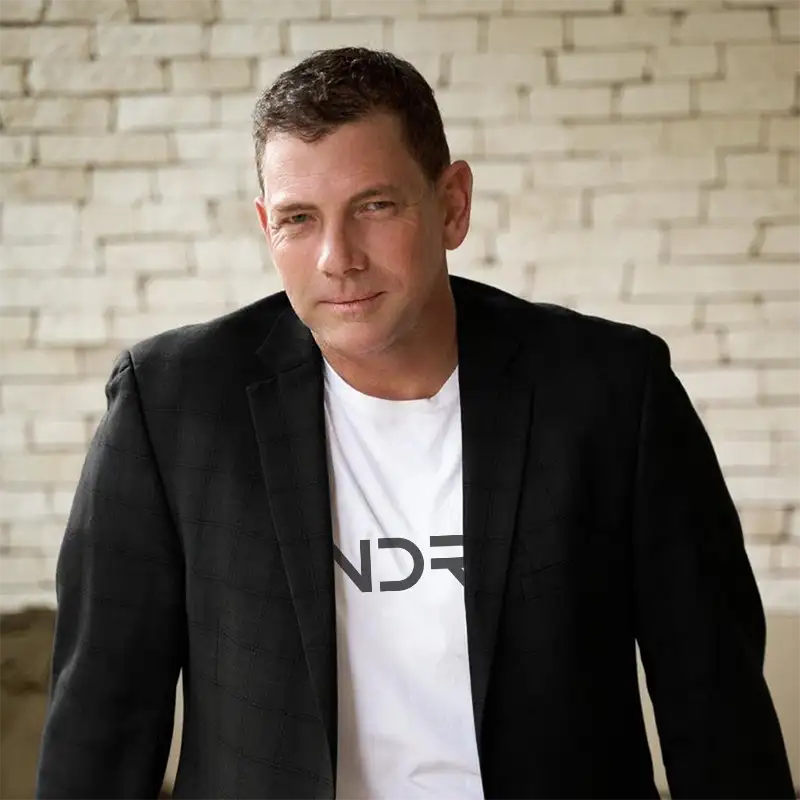
So my name is Troy Hoffman. My day-to-day role is really working in about 40 different companies right now, helping out. The main one right now is FNDRS I'm kind of really helping scale. And then we're kind of jumping in different companies at different times to help really help them scale to prepare for exit. I'm going to roll up a couple boards. so my schedule's really all over the place right now. so keep going, Brent.
Brent Peterson (00:44.972)
Yeah, what was your passion? do you have that you do outside of being on 40 different companies?
Troy Hoffman (00:52.534)
Passion you know it it's kind of interesting. I went over this recently I really discovered like I really like serving people like I've been involved in Really helping people since our kid we built the youth church from 12 kids of 800 kids showing up on a Wednesday night When I was younger, you know, we've done a lot of like give back stuff. I'm on a we help a lot of different nonprofits We have one day. We have a six-story Children's Hospital in Africa and Kenya outside of Kenya and
that we help with, work with a lot. mean, there's just a lot of programs like that. And I think it's really, my main thing is helping leaders be kind of a leader of leaders, but support them from behind. Like I don't need to be in front of them, kind of from behind where like the secret person they can call when life's challenging and where they need real help. And they really want someone to help give them real guidance and really help pour into them, you know? And I think that's kind of my passion, really helping a lot of people if I make money out of it or not. And I've been doing that for many decades now.
So I think that's really my passion. On the side, like I still go, we'll go e-foiling, we'll go wakeboarding, we'll go surfing a lot. You know, where we have time, we went, spent the last, spent about a couple weeks snowboarding. You know, every year we're going to Colorado and try different places up there. We're about to say breaks, but they're not breaks, they're different mountains. We'll try. So this year we did Keystone and Breckenridge, and then we just did Park City.
up there and there's been no snow, it's all fake blown snow up there. So that's kind of what it would just kind of hang out the kids and Elena and the wife whenever I can. So.
Brent Peterson (02:29.356)
Yeah, that's awesome. so, so well, before we get into content, we're going to talk a little bit about EO and YPO We'll talk a little bit about some of that, but more more about about being in the middle of it. Before we do that, I'm going to tell you a joke. All you have to do is give me a rating eight through 13. It's called the free joke project. So here we go. If you ever get locked out of your house, talk to your lock calmly.
Troy Hoffman (02:48.17)
Yes.
Okay?
Brent Peterson (02:57.004)
because communication is the key.
Troy Hoffman (03:04.605)
I don't know when it's fun.
Brent Peterson (03:10.862)
I gotta say something. Give it a 13. That was pretty good. You gotta talk to your lock calmly. communication is the key. It's your lock and talking calmly, that's good way to communicate. It's not funny. No, it's all right.
Troy Hoffman (03:11.19)
I don't know on this one. What communication?
Troy Hoffman (03:24.829)
Yes, I'm so terrible at these jokes. I'm so bad. don't think I could even, I can't tell a single joke. It was just there. And I've got some really good friends that are actually pretty decent sized comedians now. And I was like, man, how do you come up with this stuff? I can't come up with anything. I've never, it was always a boring one. You know, so.
Brent Peterson (03:46.947)
I got an easy one. How do you find Will Smith in a snowstorm? Look for the Fresh Prince.
Troy Hoffman (03:54.517)
That's a 13. That's a good one. That's a good dad joke.
Brent Peterson (03:59.151)
All right, good. All right, well, so now we've set our stage good. Now we're set up for success. Yeah, so in the green room, we kind of talked about EO and what it means in EO. And getting into EO, you're probably profitable to get to the million dollar mark, and hopefully. But a lot of EOs don't get into that spot where either you enter a company halfway and you end up
Troy Hoffman (04:03.763)
Yes.
That's too funny. That's funny.
Brent Peterson (04:29.186)
burning a lot of money and kind of dealing with some of that. And then hopefully they do want to exit. talk a little bit about that sort of midpoint that maybe a lot of entrepreneurs don't enter into unless you're in the maybe VC space and in the VC is saying, here's your runway, you have $100 million to burn and hopefully be profitable in five years.
Troy Hoffman (04:55.028)
I think, well, when I answer it this way, right? I think you go through stages, right? And there's what they don't teach me. Well, first, lot of EOs is how do I get my company going? How do I keep my life together? How do I get my company to grow and like me not be working 80 hours a week? That's kind of a lot of EO. How do I apply mastering the Rockefeller habits? How do I apply scaling up? How do get my management team built? How do I build the HR systems? How do I build all my,
marketing, my sales, my processes, how do I them all that documentation? How do I build my compensation plans? What type of compensation plan should I have? You know, and you're kind of learning that's a lot of the EO world. The next thing after that is what I call this exit prep world, right? And, and also focusing on the businessman, the business plan and the exit promise land is a three categories we teach in founders right now. Cause one is you really have to double down the businessman.
You've got to increase your education 10x. You've got to increase the application of the education 10x. You've got to increase your focus in clearing the emotional triggers and clearing any baggage and clearing anything that's holding you back from the clear vision and accomplishing the one clear signal that you're going after, the one clear goal, the one clear vision and clearing all the noise so the company can grow and you can finally exit the company one day. And make sure that your estate plan
your tax plan, your team plan, your company plan, and your re-entry plan are all in alignment, right? And I think that's one of the things no one's teaching in EO, by the time guys exit, they're on boats in the Caribbean. They're living in Hawaii with you. You know what I mean? They're just chilling. And it's not a lot of money in doing this coaching thing. People want to do it and they want to help, but it's not a lot of money in it. And so compared to running a company where you're trading
You're time for dollars and all turning you're having dollars come in and with very little time. And then next you know you're working one day a year and making millions a year. That's leverage. That's what you want from a company. You want to end up working one day a year. There's a book that every entrepreneur in EO should read by another EO member and why old but YPO members named Scott Fritz. If you guys haven't read this book, the 40 hour work year, I would buy it. I would read it. I would devour it along with scaling up master the rocketing, how the fellow habits.
Troy Hoffman (07:19.155)
These are all the must reads and must applies, right? But when you're going through this processing, you exit, right? Well, there's a way of then you want to go involve yourself with other companies. And one of the guys, this guy, John, he's an ex-EO'er too He has a house on mosquito Island, which is Richard Branson's second Island. only nine houses on there. Every one of these houses is 40, 50, a hundred million plus homes.
on this island. It's almost like it's like the who's who of entrepreneur world that has houses here. It's mind blowing. John said this one time he's like, it was kind of just casually talking. He's like, here's some things that every entrepreneur does wrong when they do exit. Number one, they get a real estate projects. Number two, they don't give themselves permission to relax and just enjoy and take time off. Number three, they start investing in a bunch of companies and we all start making mistakes and we can always jump back into these companies and
And just magically, because we're successful once we do it again, even though it took us 25 years to become successful, right? And something usually 15 years or 10 years, it's usually a really long road. And he said this, he's like, give yourself number one permission to take off after you exit. Number two, give yourself, you know, permission not to jump into any crazy real estate things. Number three, he's like, don't start any new companies. And I was like, wow, I wish someone had told me this years ago.
because I felt like it was my obligation or I had to go back to work or I had to start more companies. And I made the mistake of investing in a lot of companies and I, and some are doing okay. And some are just disasters because I was not the driving force in it. And a lot of other entrepreneurs that look good, smell good, but they haven't done repetitive success. You start realizing, these guys are not going to make it. And a lot of entrepreneurs think they're so brilliant.
and their ego holds them back from their growth. So if you're not growing at 10, 15, 20, 50, 100 % a year, I would say the number one thing holding entrepreneur back is their ego. They're not listening, they're not learning, they're being held back by their own. I'm better, I'm smarter, I'm more intelligent. That's why I was telling you, like I sign up for all these entrepreneur groups. get feedback from all kinds of people. I've even gotten the ex Marine recon and he did ranger school too and then he did all these other
Troy Hoffman (09:44.39)
branches, was a sniper. I got him giving me feedback on a weekly basis right now. I just other aspects he's seeing me in me as a man. I signed up for this coach for this just being a better husband, right? So when you get all this feedback, you're able to start getting clearer. And this is why we built this brand called founders, because no one's teaching you how to prep for exit, how to truly exit well and how to reentry well. And until you learn these things, you will not know because you just don't know. So that's kind of what
I've been kind of thinking about in that space.
Brent Peterson (10:14.924)
Yeah, and then that's super interesting. That's super interesting. I agree with you on a lot of those points that I think EO doesn't necessarily equip you for some of that. And also, I do agree too that a lot of entrepreneurs at some point in their, and maybe when they're as old as me, they decide I can't learn anymore. what you're reflecting is that you need to be learning.
Troy Hoffman (10:22.604)
you
Brent Peterson (10:42.926)
you die. You should never say I can't learn, right? I think that's even Warren Buffett would say that at 90 or whatever age you need to continue to learn and continue to grow and there's always something new on the horizon that you can learn as no matter how old you are, right?
Troy Hoffman (10:59.281)
He would study three hours a day, right?
It was his, like, I knew someone that worked in his house randomly enough. So here's a crazy story. I moved and slept on my buddy's couch to start the first company in California. I slept on a couch for like two to four months. It was kind of like, kind of get this company off the ground and trying to find a place to live. Uh, it was in Dana point, California randomly. picked a job up at waiting tables and bartending at the Laguna Cliffs Marriott there in data point, California.
So we catered and one of my bosses, we ended up doing this catering, we ended up working at another restaurant called Trokay Restaurant. Trokay was like the fine dining place in South Coast Plaza. It was like the place. And the chef there was like the chef for a little bit of time. So we did all these catering jobs. So you also meet these other bartenders, waitresses. So one of my friends actually did catering a lot for him.
And she said, like, he literally, you could see him there, just, he would like set things up, the lunches or whatever. And he would be just sitting out there on his porch and they had like a house there and like Emerald Coast right there, I think it's called. And he would just be reading for hours every day. And it was like, and he said, it's really nice, but he was just really focused on reading and taking notes and journaling. And because she was smart, she was like, I to say, I wish she was studying in college at the time. But, and she was like, she was amazed at like,
the guy that rich would be like working that hard every day and just his schedule is full all day long, you know, and he would just sit there and read piles of stuff every day. was mind blowing. So how are we leveling up to that three hours a day, right?
Brent Peterson (12:43.726)
Yeah, you mentioned the 40 hour work year. There's other entrepreneurs that would advocate for the 120 hour work week. How do you balance out that with what others are telling us? And I think of one prominent entrepreneur that runs an electric car company that says you need to work more, you're not working enough.
Troy Hoffman (13:11.759)
I think he's leveraged himself to running three of the largest companies in the world. So he's scaling at a huge rate. I think a lot of us are staying in the same job and not growing.
And I think the question is how do we leverage ourselves to keep growing? Could the 40 hour work years to run your one company and you can get that down to four if you do it right. You know, it's just leverage. You're saying, how can I leverage myself more? mean, Elon Musk is also in speaking to Davos last week and he's also doing another person's podcast and he's also figuring out another thing and launching another thing and getting the robot company. You know what I mean? It's like.
The thing keeps growing, because he keeps leveraging himself massively more and more. So I think you got to figure out, number one, what do you want and why do you want it? Where do you want to go with your life? What do you want to accomplish with your life? What is your dream? Because then it doesn't matter, right? Because like what I'm choosing for my life is going be different from what you're choosing, my brother Zach, what my daughter wants, what my son wants, know, what my wife wants. Like everybody wants something different, you know? Like my mom wants a totally different life. Like my mom's super happy having what my daughter calls an old school Christmas tree.
Brent Peterson (14:14.734)
Mm-hmm.
Troy Hoffman (14:23.16)
And she loves it. My mom loves like the red and green and blue and yellow lights on the Christmas tree and all the old family pictures and stuff. You know, everybody wants something different. And I think the hardest thing for anybody, any human is decide what do I want? Why do I want it? And what am I willing to do to go get it? And I think that's where you need to be real, raw and relevant with yourself to say, to get clear and like, what is my life purpose?
And then do whatever it takes to discover that and work on that. And I think happiness is a, is a byproduct of living in your purpose. Happiness is the byproduct of pursuing your purpose. Cause the joy is really on the building side. The joy is actually going to that place. Like that's where all the joys, once you get the goal, it's great. lasts for a couple of minutes. You get a big check.
You sell a company, you hit something, hit a big milestone, but then afterward there's nothing. So if you're on a path continuously, it's your path. Some people love to go travel the world and sit on beaches. Some people love to go surf the world. Some people love to go see all the ancient ruins around the world. think it's really finding what you want. And then throughout, how do we support you in getting that? Now, if you're an entrepreneur that wants a scale, if you want to exit and you want to actually with millions or tens of millions.
You're going to have to learn real quickly how to leverage yourself and turn those 120 hour work weeks in your company to, you know, 40 hour work weeks to 20 to 10. Your company's worth two to three X more with you not involved than you showing up. See, because you have leverage. If you're showing up one day a year, someone wants that machine. If that machine you're showing up one day a year is kicking you off millions, that double or triple X is your valuation. And that way one day someone will buy
your company, otherwise you're just having a travel backpack, laptop lifestyle, make the millions, make sure you're set up tax wise, make sure you're maximizing your tax, make sure you're maximizing putting money away in long-term investments, because you're not gonna be able to sell that thing right away. You know, there's so many people that call us that will never sell their companies because they're the bottleneck, they're the reason our company got there and they're the reason their company's not growing and they're the reason their company will not sell.
Brent Peterson (16:42.606)
Yeah, let me ask in a different way then. In EO, in our forum where we do personal, family and business, right? And kind of what does our, when we do our deep dive, a lot of business people take that 120 out of work week and they say, I'm gonna work 120 hours and they give up their personal and their business or their family. mean, it's 120 hours in business. I think what I hear you saying is,
Elon Musk is building out more than just his family or more than just his business. He's spending time with his family. He's doing something physical or whatever. Right. I think that's what you're that's what I hear you saying. Just clear.
Troy Hoffman (17:18.894)
Well, he's superhuman and he's also building, yeah, he's doing it all. Keep going, right?
Brent Peterson (17:24.488)
Uh-huh. mean, I'm just saying, and I hear what I hear you saying is you should be happy. I might be happy if I could just run 12 hours a day and not work. Right? That would make me happy. My body could take it. A lot of people would say, no, that's kind of overdoing it. Right? So maybe there's a comparison in there.
Troy Hoffman (17:45.773)
I mean, this is where get with somebody that can help create clarity in your life. Like, and you get to architect. This is where you become the architect of your life. And I think people talk about this, but this is where EO helps a lot, right? Math out how many hours you want to spend with your wife. How many hours do you want to do a date night once a week? Do you want to plan it out? You're the boss, you do it. Even if you have no resources. I mean, most, most spouses are probably happy to just go.
have some time to connect and talk and sit and have a coffee somewhere is doesn't have be expensive. know, it doesn't have to be crazy dates. Can we walk into a park or something? You know, it's our mapping out. What do I want to do for my health? What do I want to do? And then bake that into your schedule. What do I want to do to find spirituality? What do I want to do for my reading, my intelligence, right? How do I start baking this into my schedule? And then it becomes part of your like, what do I focus on my body every day? Body first, right? Body first, body first, body first. You said 12 hours of running.
Well, that may serve you. I don't know, right? The way your body's built. Maybe it does destruct your body, but everyone's different. So we figure out what the body first is for you, then being, what's your spirituality? What's your journaling? How are you connecting with God or source or whatever you want to call it? You know, how are you connecting with yourself, right? How are you doing your meditation practice, making that into your schedule, body being the balance? How am I writing my love notes to my wife, my kids, my friends, even gratitude? How do I say gratitude to my friends? Say, man, I love you, man. So proud of you, bro.
I can't believe you guys accomplished that, know, and make sure every day you're sending encouragement. Like I said, this one guy, he's got this founders club, these young guys and they're doing great work. And I was like, man, I'm so proud of you guys, man, more entrepreneurs need what you're doing. Keep going. Why? Because all of us entrepreneurs need more. need, there's only 5 % of us really doing entrepreneurship out there and producing new stuff. That's what EO is. We produce new stuff. Entrepreneurs produce new things. We get new things going.
We need more people supporting the entrepreneur community and the person and the entrepreneur and their families. So they excel. They don't crash. They don't die. They don't commit suicide. They don't go bankrupt. They don't get depressed. They don't give up the journey. They're the, they're the innovators, right? So body being balanced and then business. What are you studying in books every day? How do you, how do you force yourself to read more, listen more, whatever your, whatever your, whatever you digest information. Like I have to do a lot auditorily.
Troy Hoffman (20:10.925)
because I got a TBI and brain injury from when I was five years old. Like I've got like almost 94 % brain injury out of 100 index in the TBI. So I have to close my eyes or move my eyes a certain direction to think about a fact. then sometimes close my eyes. So I'm really giving you the right information, right? When you ask a question. So that's the way I have to learn to work with myself. I can't sit and read hundreds of books like some of my friends. When I read books, takes me a lot longer to read than my friends do, right?
So if can listen to books and memorize the book, right? So I do a lot of audio books. sit on planes, I go for walks. I listen to audio books, audio books. I go to bed, I listen to audio books, you know? Then I'm trying to devour every aspect from, you know, and you find what you're passionate about too. Like one thing I want entrepreneurs to do is trust your instinct, trust your intuition. Like it's gonna guide you to where you need to go a lot of times, right? So listen to like what your heart really wants to go do and learn.
You don't know why it works. Just trust it. Go there. Like go do the thing. You never know what's going to transpire from it. It's going to give you energy. And energy is the number one thing we need as entrepreneurs to keep up the fight, to keep going, to serve all these people around us, to give it the highest level, to make a ton of money so we can give it all away before we die in an effective way, better than the government can, right? So one of our goals at FNDRS
is to help you make millions upon millions upon millions of dollars so you can go give that away and impact other people. See the number one thing we find with entrepreneurs, 95 % of them all have a very massive giving heart. And if you want to change society, help entrepreneurs have more money, have more resources, and have more time so they can go impact society. That's where real change happens. So keep going, Brent.
Brent Peterson (22:02.176)
No, that's awesome. And I'm going to just pin in on what you said earlier about
about energy and how important energy is in that mix and making sure that you have energy as an entrepreneur, because I think that's the magic that makes you go forward. We have a few minutes, but one last question. How do you get somebody to focus on the thing they should be focusing on the time they should if you're doing 40 things in a day? Like you can't do all 40 at the exact same time. How do you choose your priority for the day?
Troy Hoffman (22:12.043)
You
Troy Hoffman (22:40.491)
I think this is where it goes back to the old, I think Stephen Covey put it in the book, First Things First. It's a great book for anyone to read. There is a pastor of a church in Northern Washington, in Washington state. And I was there selling my t-shirts and I had hats, t-shirts, stickers, whole little business. I started when was 18, selling these product lines, Christian wear, skate wear, surf wear.
And I met this guy, his name was Casey Treat. The only thing he actually taught in his own Bible college was this verse, this book first things first. And I was like, why? goes, if any human learns this book, they'll be successful. I was like, huh, interesting. So the premise, everyone knows this is put the big rocks in, right? So we got the big, you know, 2025 calendar, big 2026 calendar on the wall. I travel with the big ass calendar book.
And I put my whole big thing in there. got 2026 and some 2027 stuff now on there. And so, this is my daughter, Nellie. Say hi, Nellie. And, I'm good. Thanks, babe. And so, and so real quick, the, the, the premise is the big rocks in the calendar. So right now I put all the events I put in there where we're going to go travel.
Make sure that we're clear on where we're going and where we're going for Christmas next year. So we're trying to get in there and then you start thinking of what else I want to accomplish this year. Like you do this long running thing last year in 2025, I swim around Key West. It was a 12 and a half mile swim. I had to in their training, try to go back and like put my training schedule in there. Right. This year I want to basically stay on the Island because my daughter is her 10th grade year and she's joined for student council. Right. So that's where, um,
You got to bake all this stuff in your calendar. And then you start running the yearly planning, which is doing that. And you run the quarterly planning. What's happening in the next 90 days and refine that process, put more flight information, more workouts on the calendar. Make sure you're booking everything, right? And then you go drop it down into the next level and you're going for your weekly meetings. So you really want to make sure you have roadmaps mapped out. Like you're using project management tools or you're leveraging teams too, right? Like I can't do it. Like we have one company I'm on the board of.
Troy Hoffman (25:04.372)
There's the ex CFO and there's another guy that's kind of like this chief operating officer. And there's another guy that's actually the CEO. I'm kind of communicating with all three, but I can't, I don't have time to look at stuff. have to jump into meetings, hear what I can do, talk to attorneys, make sure I'm voting the right way for the board stuff. Right. So can't do all the things I can go raise capital for four of the companies, but I can only do that when I run across a person and say, Hey guys, I think this investment would be the trucking company has great returns.
The Indian company has great returns, the trading platform. Which one do you feel, and here's your risk factors. What do you want? What are you interested in? Right? And so can only leverage my connections when I meet with somebody, I try to leverage that. I try to leverage my connections to bring the right person at the right time into that company. I'm not the genius. I just got to work my network, my skillset. Right? So I think it's leveraging, leveraging yourself and being clear. And this is the hard part. You've got to get clear. So I'm to be clear. What do I want? Why do I want it?
And how can I help this thing? And it's hard. Every level you go up, like right now it's just, it's difficult to do this again. You're always rescaling yourself, which is really hard. So did that help, Brent?
Brent Peterson (26:14.006)
Yeah, that's awesome, Troy. That's great. Thank you very much. Troy, we have a few minutes left. As I close out the podcast, I give everybody a chance to do a shameless plug about anything they'd like. What would you like to plug today?
Troy Hoffman (26:21.235)
Okay.
Troy Hoffman (26:28.746)
So I want to plug FNDRS This is my give back to society. Like I got, got to exit the company really well. I've got some other things going. Um, this is the one I'm pouring millions in cause I wanted to build something, a place where people that are like EO or it was like you and I and YPO or is another entrepreneurs that they have a good place to go where people actually care. Number one.
And they know how to help people scale legitimately in all aspects, not just in one aspect or another aspect, but in all aspects of scaling and taking care of yourself, taking care of your business and then scaling so you can prepare for a sale one day. You know, a lot of people on this thing are going to go to have to sell their business one day. We're all exiting. We're all going to heaven one day or wherever people say they go. We're all going to die one day. So we're all going to exit. Why don't you be prepared?
for exit, make sure your business is ready to sell, make sure estate plan, your tax plan, everything's in alignment. This is what we do at FNDRS We really help people get clear on where they're at and give them the information and education. And we call it exication, not just education, because they need to be exicated and executed so you can sell your business, right? So you're going to live in the promised land after you sell and make sure you don't screw it up. Because if you just go to a business broker, an M &A firm, they're just going to sell your company. don't.
talk to you. They talk to your attorney and CPA. What you need is to be prepared and have a good, think about how much knowledge and energy you took to make all the money you've made.
and write down on that sheet of paper how much money that is. If you're making $250,000 a year the last 20 years, right? And that's like your money. Let's say it's even $500,000 in the last 10. Okay, that's $5 million. And let's say it's over 20, that's 10 million. But we're about to sell your business for 10 or 20 million. You only spent a couple of hours on it. You're gonna get screwed. You haven't got the education. You don't understand the terms of the deal.
Troy Hoffman (28:29.351)
You don't understand how to make sure your business looks good to a buyer. You don't understand what type of options you have, how to start preparing it. And that's what we're really doing. And then you don't even spending any time in the right tax and estate planning and the ones that are missing out in your family, the charities you care about and who wins the government. You want a California government or a Minnesota government getting your money after what you've seen, their faithfulness with the government. Look how much money they gave all the Somalians to open fake daycares.
Like we know that you as an entrepreneur are do better with those resources than they will. You're gonna be more faithful with that money. Your money, here's another one thing that givers care about right now. We work with one of the largest dafts in the world, right? Called signatory. When they just did a thing, what givers care about most with their dollars is the impact. They wanna see the impact, they wanna touch the impact, they wanna taste it, feel it, they wanna know that their money's gonna impact. You're gonna be in control of those dollars if we show you how.
You're going have so much impact with that money that you're going to help change society. And that's what we care about at FNDRS
Brent Peterson (29:34.219)
That's awesome. That's a great thing.
Troy Hoffman (29:35.098)
If we can help anybody in any way, let us know, man.
Brent Peterson (29:38.175)
Yeah, that's perfect. Thank you so much. Thanks for that, Troy. Troy Hoffman is a serial entrepreneur and is a great guest. Thank you so much for being here today.
Troy Hoffman (29:39.591)
Yes.
Troy Hoffman (29:52.987)
Thank you, Brent. Have a great day,